
Middletown, DE · Garage Door Service
Garage Door Openers and Power Outages: What Middletown Homeowners Deal With
Middletown homes built mostly between the 1980s and 2008 run openers that fail differently in cold-band power outages. Here's what to check before you call.
- Repairs & new doors
- Springs & openers
- Serving 7 nearby communities
What Local Conditions Do
Middletown sits in a COLD-severe climate band, which means winter isn't just cold snaps - it's sustained cold that stiffens grease, shrinks metal tolerances, and makes a marginal opener motor work harder to pull a door that's already heavier than it was in July. Combine that with housing built between 1945 and 2008, with most of it dating to 1993, and you get a mix of opener generations that don't behave the same way when the power drops mid-lift.
An opener installed when a house was built in the late 80s or early 90s predates most of the battery-backup standard features you'd find in a newer unit. When a winter storm knocks out power, that older opener simply stops - no backup, no graceful shutdown, sometimes a door left half-open in freezing air. Newer installs in the same neighborhoods may have backup batteries that give you a few cycles before they're drained too. The cold doesn't cause the outage, but it decides how bad the outage is for your door.
The Situation
The service area around Middletown covers roughly 26,801 households, with 13,248 of those owner-occupied houses - a mix old enough that opener generations vary block to block even within the same subdivision. Housing stock here runs from 1945 up through 2008, but the median year is 1993, which puts a huge share of these openers at an age where the circuit boards, not just the motors, start acting up in extreme cold.
The surrounding communities - Townsend and Odessa three miles out, St. Georges and Glasgow and Delaware City closer to ten, Smyrna, Clayton, Kenton, Brookside further on, and Cheswold, New Castle, Wilmington Manor, and Newport out to twenty miles - show the same 1980s-and-90s concentration in their housing. That's not a coincidence; this whole stretch of Delaware built out in roughly the same window, so a lot of these openers are hitting the same age ceiling at the same time.
At a median household income of $78,333, most owners here can afford to upgrade when an opener finally quits, but plenty are still running the original unit that came with the house, because it's never fully died - just acted up.
Checking It Yourself
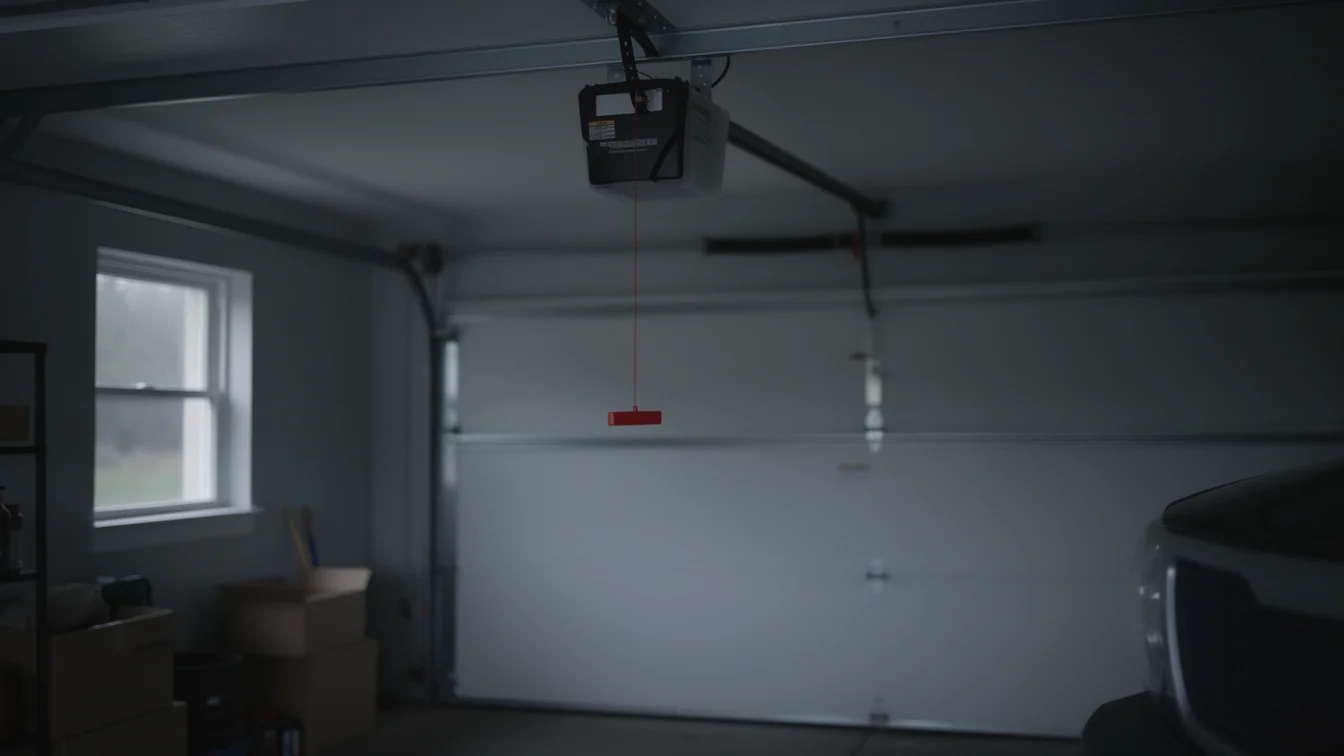
Before you assume the opener is dead after an outage, pull the manual release cord - the red one hanging from the trolley - and see if the door moves freely by hand. If it's heavy or binds, that's a spring or track problem, not an opener problem, and cold makes springs lose a little tension they won't get back without adjustment.
If you have a battery backup unit, test it on purpose: cut the breaker and see if the door still cycles. A lot of owners find out the battery's dead only when they need it. Batteries lose capacity faster in cold garages, so a backup that worked fine in August can fail in January.
Check the sensor alignment at the bottom of each track - a knocked sensor is the most common reason a door won't close after any disruption, power-related or not, and it's a two-minute fix if you know where to look. Also worth a look: the wall switch and the logic board inside the opener housing itself, since a surge during a power event can trip something without any visible damage. If none of that explains it, stop there - guessing past this point usually makes it worse.
When It Stops Being a DIY Job
If the manual release moves the door freely but the opener won't engage even with fresh batteries and good sensor alignment, the circuit board or motor has likely failed - and on units from the 1980s-90s stock that's common around here, replacement boards for that model may simply not be made anymore. At that point you're not troubleshooting, you're sourcing a part that may not exist, and the honest answer is usually a new opener rather than a repair.
We don't recommend opening the opener housing yourself to chase a board problem - the diagnostics take the right meter and the failure modes look identical from the outside. And if the door is still heavy to lift by hand after you've released it, that's a spring issue sitting underneath the opener problem, and springs under tension aren't a safe DIY repair regardless of what's wrong with the motor.
One limitation worth saying plainly: we can't always get an exact replacement board for an opener from this era overnight. Parts for older residential openers sometimes take longer to source than the repair itself, and sometimes the straight answer is that a full opener swap costs less than waiting on a part that's hard to find.
Frequently asked questions
Why does my garage door opener act up every winter but work fine in summer?
Cold stiffens the grease in the motor and drivetrain and can affect the logic board's response time, especially in openers from the 1980s-90s era common around Middletown. If your opener is original to a house from that window, the cold isn't causing new damage so much as exposing wear that was already there.
Does a battery backup opener actually help during a power outage here?
It gives you a limited number of cycles, not unlimited use, and cold shortens battery life further. If your opener predates the backup-battery standard, a power outage just stops it - there's no backup to fall back on, which is common in the older housing stock across this area.
My door won't close after the power came back on - what's wrong?
Check the sensor alignment at the base of the tracks first; a jolt during the outage can knock one out of line and that's the most common cause. If sensors are aligned and it still won't close, the logic board may have been affected by the power event itself.
Is it worth repairing an opener from the 90s or should I replace it?
If the board or motor has actually failed, parts for that generation of opener are getting harder to source, and a full replacement often costs less than waiting on an obsolete part. If it's just a sensor or a switch, repair makes sense.
Related garage door services in Middletown
More garage door guides
Book garage door service in Middletown
Call now or request a quote - tell us what the door is doing and where you are.