
Middletown, DE · Garage Door Service
Garage Door Maintenance for Delaware City's 1962-Era Doors
Delaware City's houses mostly went up around 1962 - older hardware than the rest of our service area. Here's what that means for your door and how we handle it from Middletown.
- Repairs & new doors
- Springs & openers
- Serving 7 nearby communities
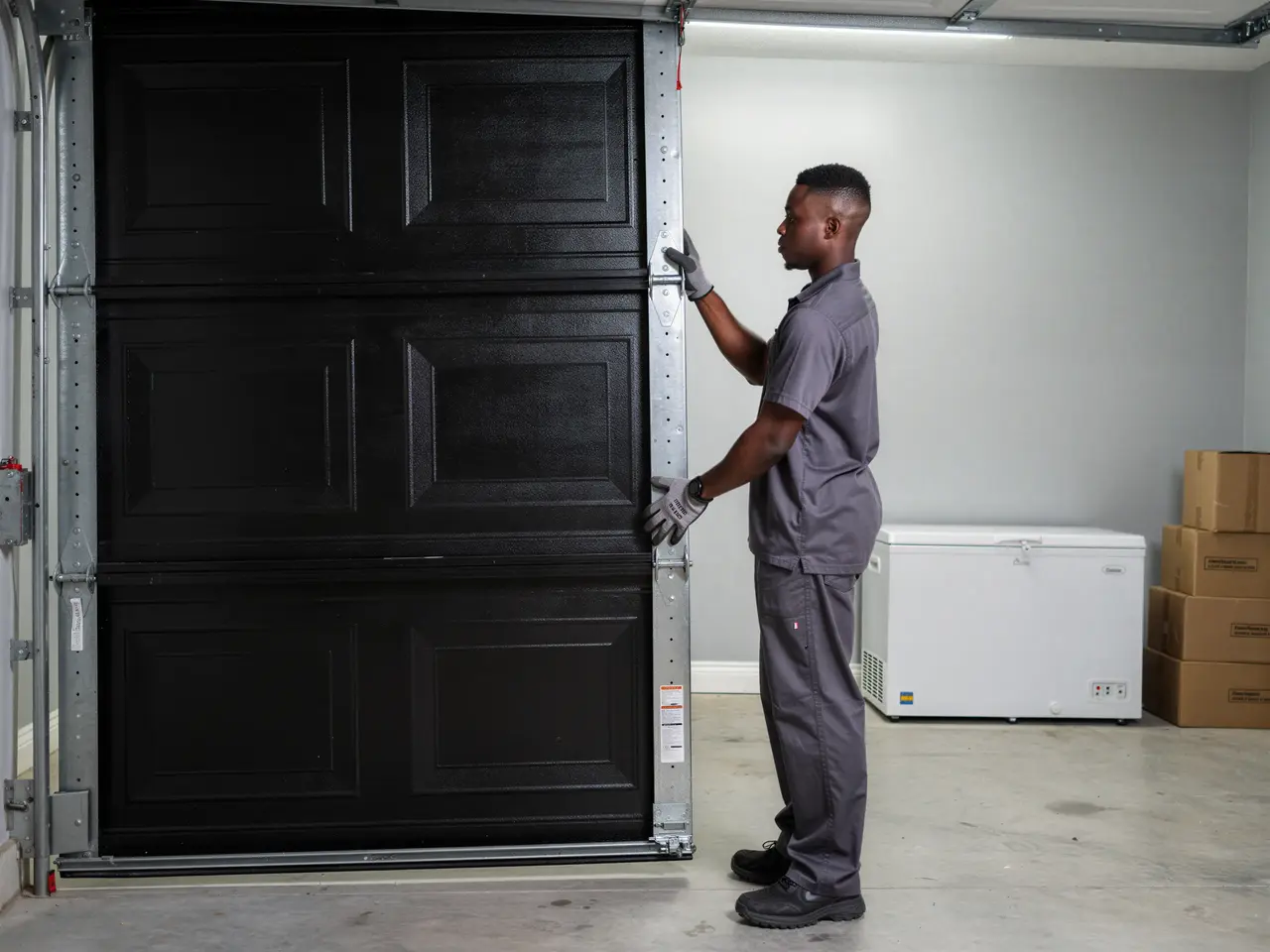
Doing It Yourself
The typical house in Delaware City dates to around 1962, which puts a lot of this town ahead of the broader service area's median build year of 1993. That matters for maintenance because a door and opener installed or replaced in a 1962 house has usually been through at least one or two hardware generations already - you might have a newer steel door hung on an older jamb, or original hardware that's outlived three openers. Before you grab a ladder, check what you're actually dealing with. Look at the spring: is it a single long coil down the center of the door (older extension-spring setup) or two shorter coils above the horizontal track (torsion)? Tighten loose hinge bolts with a wrench, not a screwdriver - stripped screw heads on 60-year-old jambs are common. Lubricate rollers and hinges with a garage-door-specific lubricant, not WD-40, which washes out grease and attracts grit. Check the weatherstrip at the bottom panel; in a cold-climate winter, a gapped seal lets in enough air to ice the track. What you should not do yourself: touch a torsion spring under tension, or adjust opener force settings on a unit you didn't install. That's where a 1962-era house and a 1993-era house part ways fastest.
How It Shows Up
On houses this age, the complaint we hear most isn't "the door won't open" - it's "the door's gotten loud" or "it's starting to stick on one side." That's usually track misalignment that's been building for years, not a sudden failure. With 694 households in Delaware City, most built in the same narrow window, we see the same pattern repeat: original wood jambs that have shifted slightly with the foundation, throwing the vertical tracks out of parallel by a quarter-inch or more. You won't notice day to day. You'll notice when a panel binds on one roller and the opener starts straining, drawing more current than it should. Springs on houses this age are also closer to end-of-life by the numbers - most torsion springs are rated for 10,000 cycles, and a door used twice a day for six decades is well past that math, regardless of whether it's ever broken yet. The other common sign is a cable that's starting to fray at the drum, visible as small wire tufts if you look closely with the door down.
The Complications
Delaware City sits in a severe cold climate band, and that's harder on original hardware than on a door installed in the last ten years. Steel contracts in cold, and on a door hung to 1962-era tolerances, that contraction is enough to bind a track that was already a little out of square. We also run into non-standard spring sizes on houses this age - torsion springs were not as standardized then as they are now, so a replacement spring sometimes has to be special-ordered rather than pulled off a shelf. That's a real limitation: if your spring is a size we don't stock, the job can mean a return trip once the part comes in, rather than a same-visit fix. Opener compatibility is another snag. A house wired for an opener in the 1960s or 70s often has a circuit that wasn't built for today's higher-draw units, so a straightforward opener swap can turn into an electrical conversation first.
Why This Fails Locally
None of this is about Delaware City being neglected - it's about the math of a 1962 build date sitting inside a service area whose median house went up thirty years later. A maintenance schedule built around newer stock (checking opener sensors, tightening newer hardware) misses the failure points that actually show up here: aging torsion springs past their cycle life, jambs that have settled unevenly, and wiring that predates modern opener draw. We come out from Middletown, about 11 miles away, and the drive itself isn't the issue - it's that a generic tune-up checklist doesn't catch what a 60-year-old door actually needs. At a household income of $78,333, replacing a whole door system isn't always the right call either; a lot of these doors are mechanically sound and just need the track reset and the spring brought up to current tension, not a full swap.
Frequently asked questions
How old is a typical garage door in Delaware City?
We can't say the door itself, since doors get replaced over time, but the house it's hung on is typically from around 1962 - thirty years older than the median house across our wider service area. That often means older jamb hardware and non-standard spring sizes, even where the door panel itself has been updated.
Do you have a crew based in Delaware City?
No. We run out of Middletown, about 11 miles away, and drive out for scheduled jobs and maintenance visits. We don't keep a branch or depot in Delaware City.
Why does my spring need a special order instead of a quick swap?
Torsion springs on houses from the early 1960s weren't built to today's standard sizing. If yours is an odd length or wire gauge, we may need to order the exact match rather than pull one from the truck, which can mean a second visit.
Is it worth replacing an old door instead of maintaining it?
Not usually, if the frame and track are sound. A lot of 1962-era doors just need the spring tension corrected and the track realigned. Replacement makes more sense once the jamb itself has shifted enough that realignment won't hold.
More garage door services in Delaware City
Book garage door service in Middletown
Call now or request a quote - tell us what the door is doing and where you are.